Adhesion test in accordance with DIN EN ISO 2409 (grid cut) and DIN EN ISO 16276-2 (cross-cut)

Adhesion test
- DIN EN ISO 2409, cross-hatch test
- DIN EN ISO 16276-2, cross-cut test
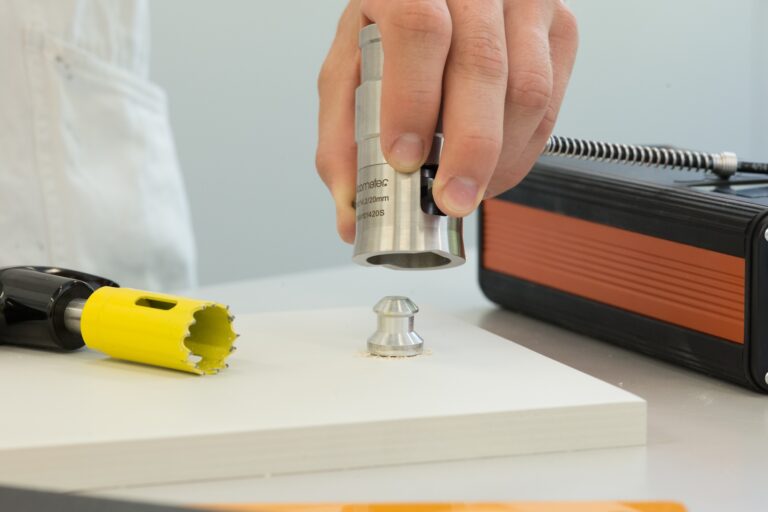
- DIN EN ISO 4624, stamp tear test
Armasuisse
BMW
German Armed Forces
German railway
Liebherr
Mercedes/Daimler
NATO
Porsche
Other
Volkswagen
Scope of services: What you get
01
Selection of the appropriate test method
The choice of test method depends, amongst other things, on the coating thickness, the coating system, the substrate and the relevant test requirements.
02
Implementation in accordance with standards
The test is carried out in accordance with the relevant test procedure and the requirements of the applicable standard.
03
Evaluation of the test results
The results are assessed and documented on the basis of the evaluation criteria defined in the relevant standards.
Cross-hatch test in accordance with DIN EN ISO 2409
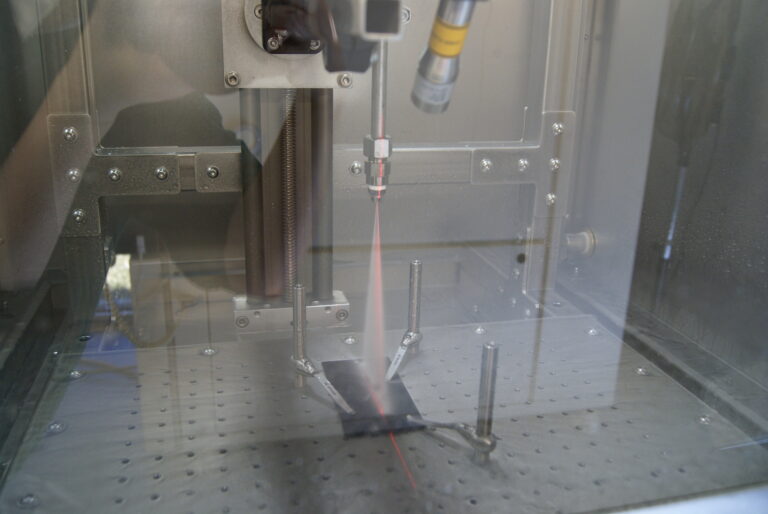
The cross-hatch test is a standardised method for assessing the adhesion strength of coatings. A prerequisite for a meaningful test is the selection of a suitable cutting tool and cutting spacing in accordance with the existing coating thickness.
The coating is cut through to the base material by making parallel cuts in two mutually perpendicular directions. This creates a defined grid pattern.
Once the cross-hatch pattern has been cut, the coating is assessed in accordance with the test procedure described in the standard. The assessment is based on the cross-hatch classes Gt 0 to Gt 5. The lower the rating, the better the adhesion of the coating.
An overview of grid-cut classes
| Grid-cut class | Description | Area removed |
|---|---|---|
| Gt 0 | The cut edges are completely smooth. None of the squares in the cut grid have come away. | 0 % |
| Gt 1 | Small pieces of coating have come away at the intersections of the grid. | Up to 5 % |
| Gt 2 | The coating has partially peeled away along the cut edges and/or at the points where the cuts meet. | More than 5 to 15 % |
| Gt 3 | The coating has partially or completely peeled away along the cut edges. | More than 15 to 35 % |
| Gt 4 | The coating has peeled off significantly along the cut edges. | More than 35 to 65 % |
| Gt 5 | The coating has come away over a large area. | More than 65 % |
Cross-section test in accordance with DIN EN ISO 16276-2
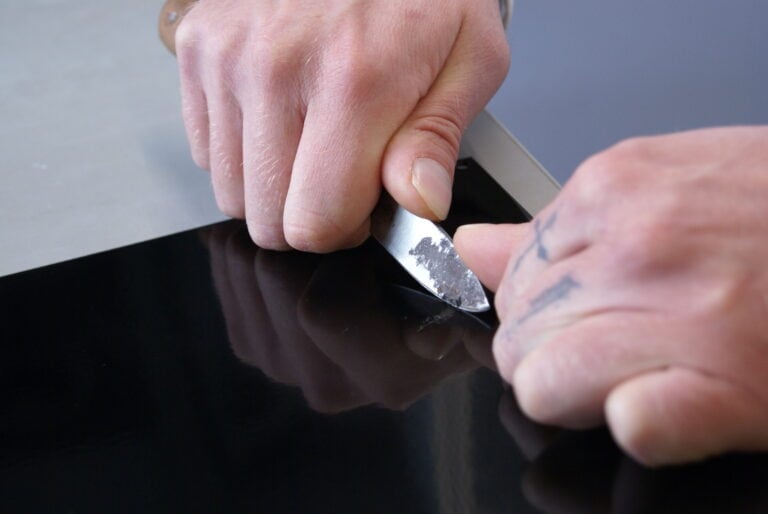
For thicker coatings, the cross-cut test can be used. In this test, a cross-cut knife is used to cut a St Andrew’s cross down to the base material, with an opening angle of between 30° and 45°.
Damage to the coating is assessed, starting from the point of intersection, on the basis of the reference images defined in the standard.
Comparing methods: grid cut, cross-cut or stamp tear test?
Which test method is suitable for your coating depends, amongst other things, on the film thickness, the coating system, the substrate and the specific test requirements.
Cross-hatch test – DIN EN ISO 2409
The cross-hatch test enables a quick and standardised assessment of the adhesion of coatings. The result is evaluated using the cross-hatch classes Gt 0 to Gt 5.
Cross-section test – DIN EN ISO 16276-2
The cross-cut test is used in particular for thicker coating systems. In this test, the coating is cut in a defined St Andrew’s cross pattern and the resulting damage is assessed against standardised reference images.
Adhesion test – DIN EN ISO 4624
In the peel test, the adhesion strength is determined by a tensile force applied perpendicular to the coated surface. This method enables the quantitative adhesion strength to be determined, which is usually expressed as tensile stress.
We’d be happy to work with you to determine which process is best suited to your coating: Request a consultation now.
Procedure: How your exam works
01
Enquiries & Advice
Please describe your coating system and your testing requirements to us. Together, we will determine which test method is suitable for your application.
02
Send in a sample
Please send your coated samples to our testing laboratory.
03
Carry out the test
The examination is conducted in accordance with the relevant requirements.
04
Assessment & Documentation
The test results are assessed in accordance with the relevant evaluation criteria and documented in a transparent manner.
5 reasons to choose our laboratory
- Various test methods
- Testing in accordance with standards
- Technical expertise
- Personalised advice
- Transparent assessment
FAQ – The most important questions
What cutting distance is required for each layer thickness?
The required cutting distance depends on the film thickness and the specifications set out in DIN EN ISO 2409. Smaller cutting distances are used for thinner coatings, whilst larger distances may be required as the film thickness increases.
What level of grid pattern is acceptable?
Which cross-hatch test class is acceptable depends on the specific requirements of the coating system. DIN EN ISO 2409 describes the test procedure and evaluation, but does not specify a universally applicable limit value for every application.
Many technical specifications or customer requirements set out specific criteria. As a general rule, low cross-hatch adhesion grades indicated good adhesion of the coating.
What does ‘Gt 0’ mean in the grid test?
Gt 0 is the best rating in the cross-cut test. The cut edges are smooth and no delamination of the coating is visible within the cut grid.
When is it advisable to carry out a stamp tear test?
A peel test in accordance with DIN EN ISO 4624 may be appropriate where a quantitative assessment of a coating’s adhesion strength is required.
Unlike the grid-cut or cross-cut test, this method determines the force or tensile stress at which the coating system fails.
Which test method is suitable for my coating?
The choice of a suitable test method depends, amongst other things, on the film thickness, the coating system, the substrate and the specific test requirements.